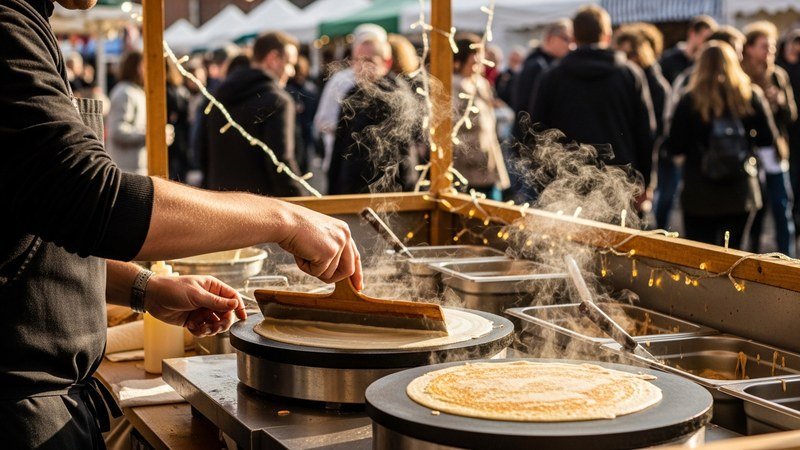
Street food has become one of the most popular ways to trade across UK high streets, markets and anywhere crowds pass through. People love a treat on a lunch break or when a tasty smell pulls them in, and crepes are one of the most forgiving street-food trades to learn. They are cheap to make, they appeal to every age group, and unlike a lot of seasonal food they sell all year round. Here is everything you need to start.
Why crepes are a great place to start
Starting a crepe business is easier than you think, even with no experience. The margins are excellent, a batter that costs pennies sells for three or four pounds, and the menu flexes from sweet in winter to fresh fruit in summer. A few reasons caterers pick crepes:
- Low startup cost and low risk
- Easy to master after a bit of practice
- Be your own boss, part-time or full-time
- All-year appeal, sweet or savoury
- Source products and ingredients locally
- The equipment is simple to use
What it costs to start
Decide on a budget first, and if this is your first venture it is wise to start small and scale up as the business grows. As a rough guide:
- Under £2,000 for a gazebo setup
- £5,000 to £6,000 for a catering cart
- £12,000 and up for a catering van or trailer
It all depends on your budget and the equipment you choose. The good thing about crepes is that you can get going from around £2,000, which makes it a genuinely low-cost, low-risk way into street food.
The equipment you need
A decent single crepe machine costs up to around £500, but two machines are better so you can serve a queue quickly. An electric machine needs a generator to power it; an LPG gas crepe machine runs off gas and needs no generator. After that you need a gazebo, a couple of tables for a simple setup, and your cooking kit, hand-washing facilities, crepe mix, sauces, mixing bowls and supplies. There are plenty of professional catering suppliers for all of this, and our sister equipment site stocks the machines themselves: take a look at the LPG crepe machines on MobCater.com.
Get your menu right
Crepes are versatile and lend themselves to a sweet or savoury menu. If you are not a chef, make the effort to cook food people actually want to eat. Practise until you have a few flavour combinations that work, and test them on friends and family. The most successful mobile caterers concentrate on a handful of recipes and do them really well. Pick recipes that are quick to make too, because at the lunchtime rush people will not wait around, and a slow queue loses customers.
Finding a pitch
Most towns and cities have a place where street food thrives, usually a market where stalls trade alongside each other. Local councils also advertise “remote pitches”, often on industrial estates, and many councils are happy for you to approach them about a spot you have in mind. As with any business, check the competition before you commit: a small crepe stall does best where no one else is doing the same thing, so come up with something tasty and a little different for the area you are trading in.
Licences and food safety
Before you trade you must register as a food business with your local council, at least 28 days before you start, through gov.uk food business registration. You will need a food hygiene certificate, and you will most likely need a street trading licence from the council. Any gas equipment must be checked every year by a Gas Safe registered engineer. For more on registration and ratings, see our food hygiene guide.
How much can you earn?
Here is the part that makes crepes so appealing. A crepe sells for roughly £3.50 to £4.50, and the ingredients cost only about 70p to 90p, so you make around £2.50 to £3 profit on each one. Sell 50 in a day and that is about £125 a day in profit from a single griddle. Your actual earnings depend on your pitch, the footfall and how many days you trade, but the margins are some of the best in street food.
Watch: how to make a crepe
Budget it properly before you spend a penny
Most people guess what starting costs, and find out the hard way. The app’s Startup Cost Calculator itemises the lot for your setup, vehicle, kit, gas checks, insurance, licences and working capital, and saves your figures so the plan sharpens as real prices come in.
Try the Startup Cost CalculatorCalculators come with the Toolkit (£5.99/mo) · the 12-step guide is free forever, no card needed
Frequently asked questions
How much does it cost to start a crepe business?
From around £2,000 for a gazebo setup, £5,000 to £6,000 for a catering cart, up to £12,000 and more for a van or trailer. Crepes are one of the lower-cost ways into street food.
How much can you earn selling crepes?
Crepes sell for roughly £3.50 to £4.50 with ingredient costs around 70p to 90p, so £2.50 to £3 profit each. At 50 a day that is about £125 a day; earnings depend on pitch, footfall and trading days.
What licences do I need for a crepe business?
Register as a food business with your council at least 28 days before trading, get a food hygiene certificate, and you will likely need a street trading licence. Gas equipment must be checked annually by a Gas Safe registered engineer.
