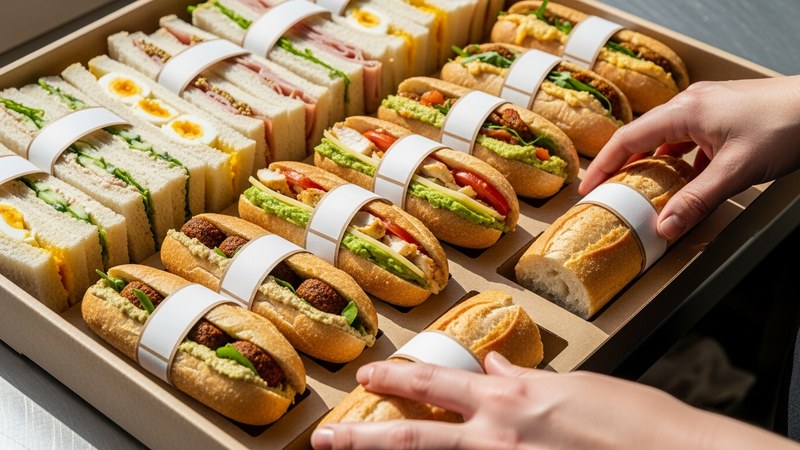
A sandwich delivery business is one of the cheapest and simplest ways into the food trade, and there is real demand behind it. The UK sandwich sector is worth around £8 billion, with over 11.5 billion sandwiches eaten a year, and the top fillings are chicken, then fish and tuna, then cheese. Many of you know me from mobile catering, but before that I ran a sandwich delivery round, so this one is from experience.
What a sandwich delivery business actually is
It does what it says on the tin: you make sandwiches and deliver them to workers in offices, factories and industrial estates. More and more people are chained to their desks at lunchtime, especially where there is nowhere nearby to buy food, and a reliable delivery round can be exactly the solution they want.
The UK sandwich industry by the numbers
The sandwich is one of Britain’s biggest food habits, which is exactly why a delivery round can work. The scale of the market:
Where sandwiches are bought
Sources: British Sandwich & Food to Go Association; Kantar market data. Figures are industry estimates, rounded.
How to get started
Getting going is not difficult and it is very inexpensive. It comes down to making up the sandwiches and building a customer base. When I started, we had a local supplier deliver fresh rolls, bread and french sticks to the house, though the lesson there is to always have a backup for when a delivery does not turn up, because the bread has to be fresh.
We put together a simple menu listing the fillings, salads, drinks, cakes and extras we offered, then dropped it round local offices, factories, garages and industrial estates. Following up a few days later breaks the ice and is a good way to gauge interest. It is also worth setting up a simple website so people can see the menu, contact you, or even order online, since most office workers are at a computer all day.
What you need
Beyond the food itself you will need a way to keep everything cold and fresh with the correct labelling, and transport to deliver, which can be as simple as a car to start, or a van or even a bicycle for a tight local round. Keep your costs low at the beginning and grow as the round grows.
The four-hour rule: once sandwiches are made and out of the fridge they should be eaten within four hours, so plan your prep and your route around that window. Getting food safety right from day one matters; see our food hygiene guide for the details.
Licences, registration and structure
You must register as a food business with your local council at least 28 days before you start trading, through gov.uk food business registration, and meet food hygiene rules. Making sandwiches from home is allowed, and the council will advise on things like fridge temperatures and hand-washing. When you are deciding how to set the business up, sole trader is the usual starting point; our guide to choosing a business structure walks through the options and the tax side.
Budget it properly before you spend a penny
Most people guess what starting costs, and find out the hard way. The app’s Startup Cost Calculator itemises the lot for your setup, vehicle, kit, gas checks, insurance, licences and working capital, and saves your figures so the plan sharpens as real prices come in.
Try the Startup Cost CalculatorCalculators come with the Toolkit (£5.99/mo) · the 12-step guide is free forever, no card needed
Frequently asked questions
Is a sandwich delivery business profitable in the UK?
It can be. The UK sandwich sector is worth around £8 billion with over 11.5 billion eaten a year, and a delivery round taps office and industrial-estate workers directly. Margins are decent and startup costs are low.
What do I need to start a sandwich delivery business?
Fresh ingredients and a reliable bread supplier, packaging and labelling, a way to keep food cold, transport (a car will do to start), and food business registration plus a food hygiene certificate.
Do I need a licence to sell sandwiches from home?
You must register as a food business with your local council at least 28 days before trading and meet food hygiene rules. Making sandwiches at home is allowed but the council will advise on requirements like fridge temperatures and handwashing.