
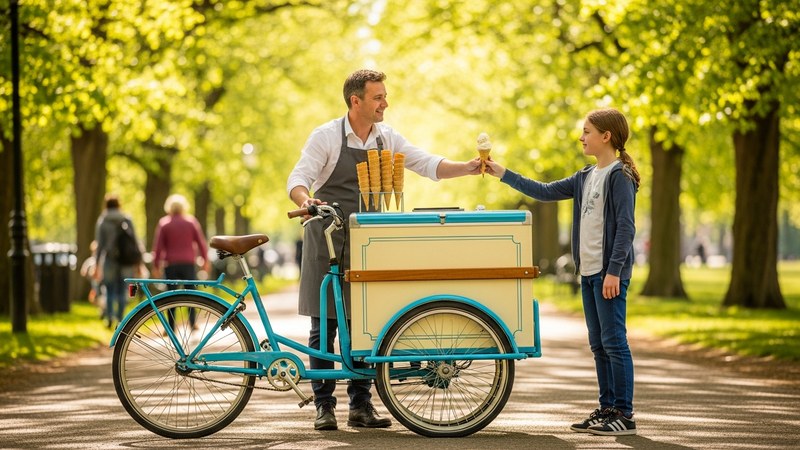
If the romance of selling ice cream appeals but the cost of a van does not, an ice cream bike is the way in. It is the cheapest entry into the ice cream trade, it is eco-friendly with no fuel to buy, and it goes places a van simply cannot, into parks, along promenades, around festivals and events. It is hard physical work and very seasonal, but as a low-risk first step it is hard to beat.
Why an ice cream bike?
The cheapest, greenest way into the ice cream trade:
Figures are typical UK market estimates, rounded.
How an ice cream bike works
Specialist manufacturers build bikes with the freezer unit built in. You charge the freezer before each outing, load it with stock, and pedal to your pitch. Remember you are carrying a full, heavy freezer as well as the bike itself, so it is genuinely physical, but it costs a fraction of a van to buy and nothing to fuel.
What you can sell
A good spread sells best: scoop cones, wrapped lollies and ice creams, and frozen yoghurt for those after something lighter. Bright, fun lines for children pull custom in parks and at events. Keep the range simple enough to serve quickly from a small freezer.
Where to pitch
Bikes shine where vans cannot easily go or park: parks after school and at weekends, seafronts and promenades, festivals, fairs, sports days and weddings. As with any pitch you need the landowner’s or organiser’s permission, so line up events early. See our pitch guide. If you later want more capacity, compare the ice cream van route.
The legal basics
Even on a bike the food rules apply: register as a food business with your council 28 days before trading, hold a food hygiene certificate, and carry public liability insurance, which events and councils will expect to see. Most riders start as a sole trader; see business structure.
For inspiration, read how a 17-year-old built his own ice cream bike and got trading.
Budget it properly before you spend a penny
Most people guess what starting costs, and find out the hard way. The app’s Startup Cost Calculator itemises the lot for your setup, vehicle, kit, gas checks, insurance, licences and working capital, and saves your figures so the plan sharpens as real prices come in.
Try the Startup Cost CalculatorCalculators come with the Toolkit (£5.99/mo) · the 12-step guide is free forever, no card needed
Frequently asked questions
How much does an ice cream bike cost?
Typically £2,000 to £4,000 for a fitted bike with a built-in freezer, far less than the £8,000+ for an ice cream van, and there is no fuel to buy.
Do I need a licence for an ice cream bike?
Yes, the food rules still apply: register as a food business with your council, hold a food hygiene certificate, carry public liability insurance, and get permission for wherever you pitch.
Is an ice cream bike business worth it?
As a low-cost, low-risk way into the ice cream trade, yes, especially for events, parks and seafronts. It is seasonal and physically demanding, so it suits someone fit who wants a cheap, flexible start.