When it comes to food-trailer security, good locks do a lot of the heavy lifting. But plenty of owners rely on an everyday padlock from the local department store — and those rarely stop a break-in, since they can be snapped apart in seconds with the right tools.
It's worth putting real effort into choosing effective locks that actually protect the contents of your trailer when you're not around. The moment you downplay their importance, you're setting yourself up for a nasty surprise. The good news: there's a wide range of purpose-built trailer locks made from tough materials that give you genuine peace of mind every night you walk away from your unit.
Which trailer locks are effective?
A few types of lock are designed specifically to protect trailers, and they're a world apart from a standard padlock.
Hinge lock
- One of the most popular locks for food trailers
- Fits across the door hinge, inside and out, with a thick locking bar
- Very hard to break, even with powerful tools
- Can take an extra padlock for even more strength
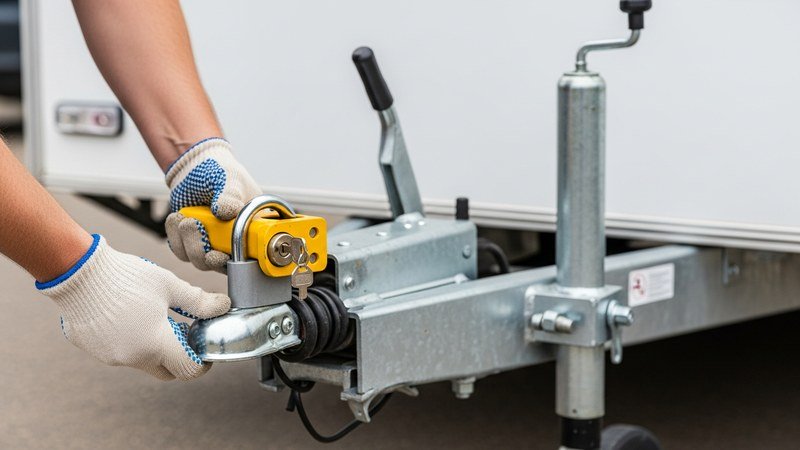
Coupler / hitch lock
- One of the best-known trailer locks on the market
- Thick, heavy-gauge steel that resists bolt cutters
- Stops the trailer being coupled to a vehicle and towed
- Usually needs a padlock — choose a strong one
Both are far more effective than a supermarket padlock. Used on the doors, hatch and hitch, they make forcing entry or towing away a slow, noisy job that most thieves won't attempt.
What to look for in a trailer lock
Two things matter most: quality and reputation. Choose locks built from the strongest materials, made to withstand abuse, with a track record for warding off break-ins. A few minutes online will tell you which brands are rated highest and which locks have been independently tested and proven.
Whatever you do, don't rely on a cheap padlock from the department store — it's the single worst choice for trailer security. Buy the best, top-rated locks you can, and treat them as protecting your whole livelihood, because they are.
Locks are one layer
Strong locks work best alongside the rest. Add a wheel clamp, an alarm system, and ideally a tracker. See our full trailer security guide for how to layer them up.
Get your security sorted before day one
The MobCater app's checklist covers security alongside gas safety, licensing and insurance, so nothing gets forgotten.
Open the free checklistFree 12-step guide forever · Checklist included in the app
Frequently asked questions
Why isn't a normal padlock good enough?
Cheap padlocks can be snapped with bolt cutters in seconds. They give a false sense of security. Purpose-built trailer locks use much thicker, tougher steel designed to resist cutting and prying — that's what actually deters a thief.
What's the difference between a hinge lock and a coupler lock?
A hinge lock secures the door across its hinge so it can't be forced open. A coupler (or hitch) lock covers the towing coupling so the trailer can't be attached to a vehicle and driven off. Ideally use both — they protect against different attacks.
How do I choose a good one?
Look for quality materials and a strong reputation. Read reviews, check for independent testing or a security rating, and buy from a recognised brand. It's worth paying more for a lock that genuinely protects your kit.
Do I still need a wheel clamp if I have good locks?
Yes. Locks protect the doors and hitch; a wheel clamp stops the wheels turning so the trailer can't be rolled or towed. They cover different weaknesses, so use them together.