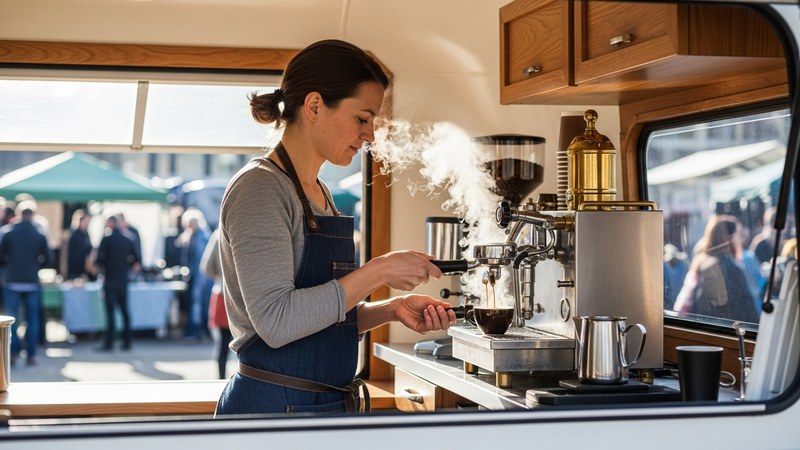
A business that blends creativity, mobility and the irresistible aroma of freshly brewed coffee — a mobile coffee business might just be the perfect venture. Picture serving your signature lattes and espressos at busy markets, festivals and scenic outdoor spots. Here's how to set one up, what it costs, and what to watch out for.
A mobile coffee business means serving freshly brewed coffee from a mobile setup — a van, trailer or cart. It's a brilliant way to bring quality coffee to events, markets, office parks and campuses. And because many of the best pitches are off-grid, most vendors run on gas, LPG or propane rather than mains electricity.
Gas, LPG & propane coffee machines
Gas-powered coffee machines are a key asset for mobile vendors. Unlike electric machines, they run on gas or propane, giving you reliable power wherever you trade. They heat water quickly and consistently, so you get proper espresso extraction even during the morning rush.
LPG coffee machines
LPG (liquefied petroleum gas) machines are popular for their efficiency and portability. They're easy to refill and run smoothly, handling high volumes without a hitch — ideal for a busy mobile setup.
Propane coffee machines
Propane machines are the go-to for true off-grid work. Compact, clean-burning and efficient, they let you trade in the most remote spots — a beachside event or a hilltop viewpoint — and still serve every customer.
Members get promotions on over 100 pieces of catering equipment, average saving £42, up to £500 on one item.
All brand new, genuine, CE and UKCA marked, with warranty.
See how the promotions work →How a gas coffee setup is put together
- Choose your machine — start with a quality coffee machine compatible with gas, LPG or propane.
- Install the gas supply — use certified hoses and regulators to connect to a gas cylinder, and have the installation checked by a competent LPG gas engineer.
- Add the essentials — a water pump, inverter and battery to run the grinder and pump, plus a water filter for quality.
- Test the system — check thoroughly for leaks and make sure every connection is secure.
- Add a water source — fit a water tank or connect to an external supply for a steady flow.
Gas is safe when it's installed and maintained properly — always use a competent engineer and keep your certification current. Our LPG & gas safety guide covers what you need to know.
The numbers: what you can earn
The UK coffee market is thriving, and the margins on coffee are what make it such an attractive mobile business. Here's a realistic snapshot.
| Measure | Typical figure |
|---|---|
| Cost to produce one cup (beans, milk, cup) | 30–50p |
| Selling price per cup | £2.50 – £3.50 |
| Gross markup | 500–700% |
| 100 cups a day at £3 | £300/day |
| Rough monthly gross (before costs) | ~£9,000 |
Those are gross figures before pitch fees, fuel, stock and your own time — but they show why a well-placed coffee unit can be so profitable. The big drivers are high-footfall locations, a menu that tempts people to spend a bit more, and keeping your running costs low.
The pros and cons
The upsides
- High, steady demand — coffee is a daily habit
- Low overheads next to a bricks-and-mortar cafe
- Scalable — start small, add units or menu later
- Creative freedom over your brand and menu
The trade-offs
- A decent LPG coffee machine costs around £2,000–£3,000
- Weather-dependent, especially at outdoor events
- Gas systems need regular safety inspections
- Licensing and permits take time to sort
How to get started
Research and plan. Work out who your customers are and where they gather, secure the licences and permits you need, and make sure your gas systems meet safety standards.
Choose the right equipment. Invest in a reliable gas, LPG or propane machine, a good grinder for consistent grounds, and the essentials — water tank, filter and milk frother.
Build your unit. Pick a van, trailer or cart to suit your plans, have the gas and plumbing installed professionally, and add eye-catching branding to stand out. Not sure which vehicle? Our trailer vs van guide will help.
Source good ingredients. Partner with a reputable roaster for fresh beans, and stock alternative milks and syrups for variety.
Market yourself. Share your locations and menu on social media, reward regulars with loyalty offers, and team up with event organisers and local businesses to widen your reach.
Budget it properly before you spend a penny
Most people guess what starting costs, and find out the hard way. The app’s Startup Cost Calculator itemises the lot for your setup, vehicle, kit, gas checks, insurance, licences and working capital, and saves your figures so the plan sharpens as real prices come in.
Try the Startup Cost CalculatorCalculators come with the Toolkit (£5.99/mo) · the 12-step guide is free forever, no card needed
Frequently asked questions
How much does it cost to start a mobile coffee business?
The coffee machine is the biggest single item — a good LPG machine runs around £2,000–£3,000. On top of that you'll budget for the vehicle or cart, grinder, water and power fittings, branding, licensing and initial stock. A modest setup can start for a few thousand pounds if you buy sensibly.
Do I need a gas or electric coffee machine?
It depends where you'll trade. Gas, LPG or propane machines let you work off-grid at markets, festivals and remote spots without a generator. Electric is fine if you'll always have a mains hook-up. Most mobile vendors choose gas for the flexibility.
How much can a mobile coffee business make?
Coffee carries a big markup — a cup costing 30–50p to make sells for £2.50–£3.50. Sell 100 cups a day at £3 and that's £300 gross, roughly £9,000 a month before costs. Location and footfall make all the difference.
Is a gas coffee machine safe?
Yes, when it's installed and maintained correctly. Use certified hoses and regulators, have the installation signed off by a competent LPG gas engineer, check regularly for leaks and keep your gas safety certification up to date.
What licences do I need?
You'll typically need to register as a food business, hold a food hygiene certificate, meet gas safety requirements, and get any street trading consent your council requires. Our licence guide walks through it.