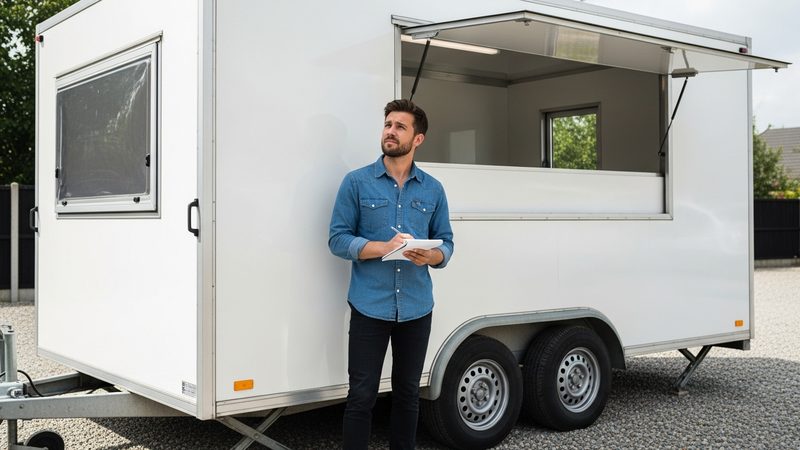
One of the biggest myths about mobile catering is that you need massive capital to start. You don't. One caterer David interviewed bought a trailer for £750 and applied professional signage to it. That same trailer sold years later for £8,500.
That's over 10× return, just from doing a few tweaks. The DIY method is the secret most people don't know about. You can start a legitimate, professional mobile catering business with £3,000–£8,000 if you're smart about it. If you have unlimited budget, you can spend £50,000–£200,000 on a brand new trailer — but honestly, that's not necessary. Here's what actually costs money, and what you can do more affordably.
The DIY method: second-hand vehicle + professional signage
The DIY method works like this: find a second-hand van or trailer that already has catering equipment (or is easy to add equipment to), and then invest in professional exterior signage from a sign company. Brand new catering trailers cost £50,000–£200,000. Like a new car, they lose value the moment you buy them. Instead, buy second-hand for £5,000–£15,000 and spend £1,500–£3,000 on professional signage from a local sign company.
What you're doing is applying the magic formula: decent second-hand platform + professional branding = looks like a franchise-level operation without the franchise cost. Better-looking units get invited to events, get bigger pitches, and attract more customers. The psychological impact of professional signage is enormous. It says "I'm serious" without saying a word.
When looking for a second-hand unit, visit dealers, check online marketplaces (Facebook Marketplace, Gumtree, eBay), look at auction sites, and talk to existing caterers. Most people upgrade as their business grows — that's your opportunity to buy their old equipment at a fraction of new cost. Inspect everything carefully. Test the griddle, check the fridge-freezer, ensure the bain-marie heats properly. Don't buy sight unseen.
Once you've got your vehicle, visit 2-3 local sign companies. Tell them your business concept, your menu, and your theme. Get quotes for full exterior design and application. Expect to pay £1,500–£3,000 depending on size and complexity. This is where the magic happens — your £750 or £5,000 trailer suddenly looks like a £30,000 professional operation.
Realistic cost breakdown
Here's what you'll actually spend to get a mobile catering business legally operational. Realistic 2026 UK numbers based on real experience and current market prices.
| Cost area | Realistic range |
|---|---|
| Vehicle or trailer (second-hand) | £2,000 – £20,000 |
| Equipment (mix of new & second-hand) | £2,000 – £13,000 |
| Professional signage & branding | £1,500 – £3,000 |
| Licensing, EHO, food hygiene | £70 – £2,100 |
| Insurance (annual) | £400 – £1,300 |
| Gas safety & initial certifications | £200 – £700 |
| Initial stock | £200 – £500 |
| Cards, website, contingency | £430 – £850 |
The total: four realistic scenarios
Cheap second-hand van with basic working equipment, low-cost professional signage, licensing and a tight first stock. Tight but possible if you find the right deal.
Decent second-hand equipment, professional signage, licensing, insurance and stock. The sweet spot — you have proper equipment and look professional without overspending.
Well-maintained second-hand van, mix of new and second-hand equipment or upgraded older equipment, comprehensive insurance and gas safety. Extra polish.
Brand new catering trailer or van with all new equipment. Enterprise-level spending. Works for some business models — not necessary to start successfully.
Budgeting for a website?
Through this site a complete catering website starts at £29.99 a month with nothing upfront, or £399 to buy outright, and you see your homepage designed free before you decide, see the free mock-up offer.
The hidden costs nobody mentions
Beyond the upfront, there are ongoing annual costs you need to budget for: annual gas safety inspection (£80–£150), annual insurance (£400–£1,500), street trading licence (£50–£2,000 depending on your council), equipment maintenance (£100–£500), food hygiene certificate renewal every 3 years (£50), National Insurance and tax (£2,000–£3,000/year depending on profit), and fuel (£150–£300/month if you're moving between pitches).
These aren't optional. Plan for £1,500–£3,000 in annual fixed costs beyond your food and daily operating expenses. This is why understanding your profit margin matters — you need to cover these costs and still make money for yourself.
Profitability: when do you break even?
If you've invested £6,000–£8,000 to start, how long until you break even? It depends on your daily income and expenses. Trading at a £25/week pitch, making £400/week revenue with daily costs (food, stock, fuel, pitch fee) of £100/day, your weekly profit might be £150–£200 after costs. You'd recover your £7,000 initial investment in approximately 12–14 months of consistent trading. Realistic and doable.
If you're strategic about location (a better pitch from the start), improve your menu pricing, and run efficiently, you could shorten this to 8–10 months. When I made strategic moves to better pitches — lorry park to retail park to football club to building site — profitability increased dramatically with each move.
Avoiding the expensive mistakes
Here's what costs money and what doesn't. Buying new equipment costs money. Buying second-hand with the right research costs less. Buying cheap equipment that breaks costs money twice. Hiring expensive consultants costs money. Teaching yourself via reliable resources costs nothing.
The most expensive mistake is not starting because you think you need £50,000. The second most expensive mistake is rushing to buy premium new equipment before you've proven your concept works. Start lean, test your location and menu, then reinvest profits into better equipment.
A 15-second look at the calculator inside the MobCater app
That’s your budget, built properly
The Startup Cost Calculator itemises your real setup, vehicle, kit, gas checks, insurance, licences and working capital, and keeps your figures saved, so the plan sharpens as real prices come in. No spreadsheet, no guessing, and a PDF you can show the bank.
Try the Startup Cost CalculatorCalculators come with the Toolkit (£5.99/mo) · the 12-step guide is free forever, no card needed
Frequently asked questions
What's the cheapest way to start?
Buy a very cheap second-hand van (£2,000–£3,000), add professional signage (£1,000–£1,500), get licensed and insured (£500), and start trading. Total: around £4,000–£5,000. Tight but possible if you find good deals. Most people budget £6,000–£8,000 for more comfort and reliability.
Do I need a brand new van?
No. Brand new costs £50,000–£200,000 and depreciates immediately. Second-hand equipment works fine if it's well-maintained. The DIY method (second-hand vehicle plus professional signage) gives you a professional-looking operation without the premium cost.
How much stock do I need on day one?
Budget £200–£500 for initial stock depending on what you're selling. Don't over-buy — you want to test what sells. Running out on day one is better than having surplus waste.
Can I get a grant or loan to start?
Some councils and business organisations offer small business grants (typically £1,000–£5,000). Banks offer small business loans but want a business plan and usually collateral. Some equipment suppliers offer payment plans. Friends and family loans are common. Explore these, but don't rely on them — most successful caterers start by saving capital.
How long before I make a profit?
If you invest £6,000–£8,000 and trade at a decent location making £150–£200 net profit per week, you'll break even in approximately 12–18 months. If you're more strategic with location and operations, you could do it in 8–12 months.
Daily Operations Checklist
Print it and fill it out by hand each day — your food-safety compliance and record-keeping, sorted.
Get the Daily PDF